

From Maryland to West Point, Can Torumtay Turns Curiosity Into Public Service
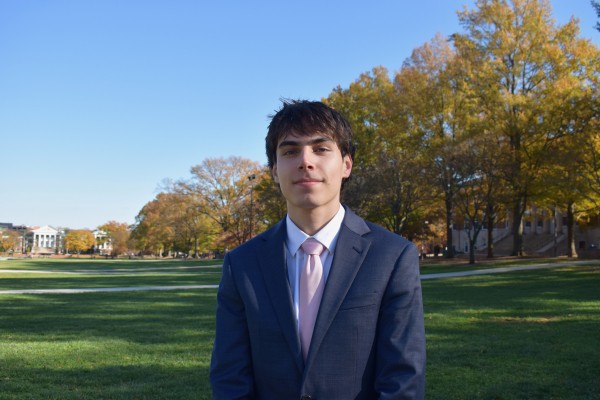
For Can Torumtay, politics has never felt distant. Growing up in a Turkish American immigrant family, the University of Maryland double major in government and politics and public policy saw how decisions made in the United States could affect people thousands of miles away.
“When you come from an immigrant family, you have an opportunity to be in tune with developments happening to your family abroad as well as domestically,” Can said. “Elections in America affect people who live in countries like Turkey. They’re often following elections here more closely than a lot of my friends and family.”
That perspective sparked Can’s interest in understanding not only what governments do, but also the history, institutions and ideas behind their decisions. At UMD, he has begun turning that interest into experience through opportunities spanning state government, public policy and international affairs.
This summer, Can was one of six UMD College Park students selected for the Maryland Public Service Scholars’ Governor’s Summer Internship Program. He was placed in the Governor’s Office of Homeland Security, where he worked under Director Marcia Deppen and alongside Deputy Chief of Staff for Public Safety Travis Nelson. The fellowship gave Can his first opportunity to work inside a government office where policy decisions were unfolding in real time. He produced research memoranda and briefing materials ahead of interagency and cabinet meetings. He also monitored state legislation and federal actions, examining how new policies and funding decisions could shape Maryland’s broader security policy landscape.
Through the experience, Can gained a broader understanding of how policy gets made and coordinated at the state level, from interagency planning to emergency response affecting residents’ well-being. Observing public safety leaders operate in that high-pressure environment also showed him the importance of managing stress while maintaining a positive outlook.
Even within that placement, Can found himself drawn most to the interagency and federal-policy dimensions of the work – the parts that echoed his broader interest in how the U.S. positions itself internationally.
Alongside his work in the governor’s office, Can collaborated with two other UMD students on a capstone project examining Maryland’s inheritance tax and its effect on immigrant families and small businesses. The team proposed phasing out the tax over six years while adjusting Maryland’s estate tax to account for the lost revenue. Can and his teammates presented their proposal to Maryland Governor Wes Moore, Lieutenant Governor Aruna Miller, and members of the governor’s executive staff. The students had five minutes to present before fielding questions from state leaders. When Moore asked whether other states had addressed similar challenges, Can drew from the team’s research into policy changes in Iowa and Kentucky.
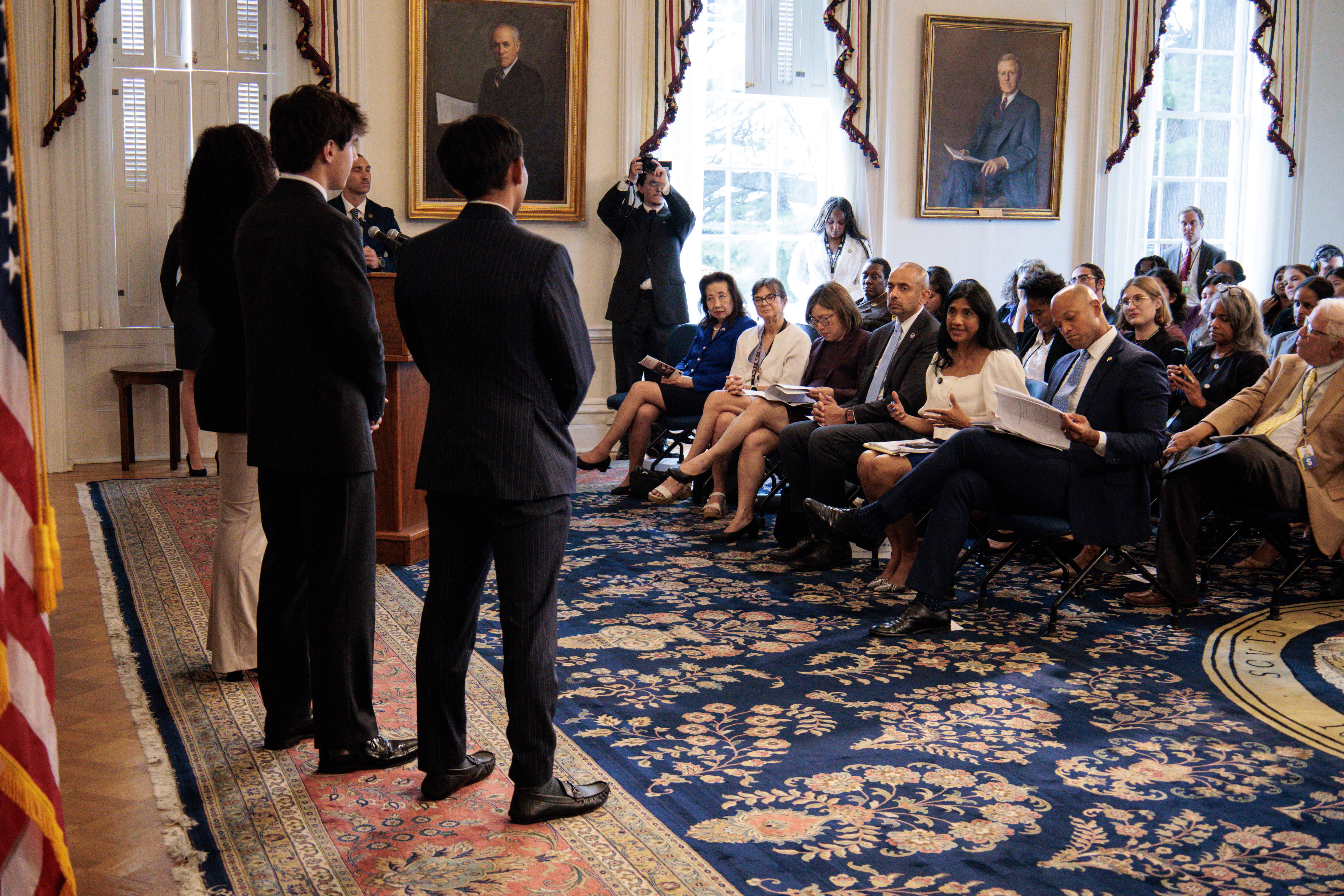
Can Torumtay and fellow UMD students present their capstone proposal to Maryland Governor Wes Moore and Lieutenant Governor Aruna Miller.
Can’s next opportunity will take him to the U.S. Military Academy at West Point. He was selected as one of UMD’s four delegates to the Student Conference on U.S. Affairs, where undergraduate students, cadets and scholars develop policy recommendations addressing major national and international challenges. Can learned about the opportunity through GVPT and used his homeland security experience and Turkish American background to explain the perspective he could bring to the conference. Its focus on the United States’ role in an increasingly multipolar world closely matches his interests, particularly his understanding of Turkey’s relationships with the United States, NATO and other regional powers.
His selection also reflects how far he has come since arriving at UMD as a Freshman Connection student. Because his first-semester classes were held in the evenings, Can initially found it difficult to participate in student organizations. During his sophomore year, he began looking for ways to become more involved. He became treasurer of the Maryland Student Legislature, a statewide organization that allows students to write and debate legislation while simulating the Maryland General Assembly. He also participated in the School of Public Policy’s Changemaker Pathways program and became involved with UMD’s Turkish Student Organization.
Through these experiences, Can met people outside his immediate circles, encountered different perspectives and learned to view the people around him as valuable sources of knowledge.
In the future, Can hopes to build on his state government experience by pursuing opportunities in diplomacy, international relations and foreign policy. He is particularly interested in encouraging dialogue between countries and regions that are often viewed as opposing one another.
For students who question whether they are ready to pursue similar opportunities, Can’s advice is simple: become involved before you feel completely prepared.
“Get out, meet people and talk to them about what they’re doing,” he said. “Even if you’re nervous or anxious, getting involved with student organizations and extracurricular activities is the biggest thing. People who are older than you—even if it’s only by a few years—can be some of your best resources.”
For Can success is not defined by securing a particular title. It means remaining engaged, refusing to become desensitized to injustice and helping strengthen the institutions meant to serve people.
“Success for me isn’t just a title like becoming president,” he said. “Success for me is staying engaged enough that I never get used to that kind of injustice, and helping the institutions meant to serve people are still standing, and still working for people, long after I’m gone.”
Published on Tue, 09/22/2026 - 10:18