UMD College of Behavorial & Social Sciences UMD College of Behavorial & Social Sciences
MENU

Topbar Menu

  • MAIR Program
  • APAN Program
  • Diversity
  • Give to GVPT
  • About Us
    • About the Department
    • Newsletter
    • Research Centers & Labs
    • Resources and Policies
  • People
    • Faculty
    • Emeritus Faculty
    • Post Doctoral Associates
    • Administration
    • Affiliated Faculty
    • Current Graduate Students
    • Alumni
  • Undergraduate
    • Prospective Students
    • Current GVPT Students
    • New IR Major
    • Major Requirements
    • Transfer to UMD's Government & Politics Major
    • Academic Opportunities
    • Internships & Careers
    • MIDCM
    • GVPT Global Learning Program
  • Graduate
    • About the Ph.D. Program
    • Current Graduate Students
    • Fields of Study
    • Graduate Admissions
    • Graduate Student Placement Record
    • Job Market Candidates
    • MA in International Relations
    • M.S. in Applied Political Analytics
    • Resources for Current Ph.D. Students
      • Placement Resources
      • Courses
      • Graduate Student Association (GSA)
      • Women's Initiative for Network Development (WIND)
Search

Main navigation

  • About Us
    • About the Department
    • Newsletter
    • Research Centers & Labs
    • Resources and Policies
  • People
    • Faculty
    • Emeritus Faculty
    • Post Doctoral Associates
    • Administration
    • Affiliated Faculty
    • Current Graduate Students
    • Alumni
  • Undergraduate
    • Prospective Students
    • Current GVPT Students
    • New IR Major
    • Major Requirements
    • Transfer to UMD's Government & Politics Major
    • Academic Opportunities
    • Internships & Careers
    • MIDCM
    • GVPT Global Learning Program
  • Graduate
    • About the Ph.D. Program
    • Current Graduate Students
    • Fields of Study
    • Graduate Admissions
    • Graduate Student Placement Record
    • Job Market Candidates
    • MA in International Relations
    • M.S. in Applied Political Analytics
    • Resources for Current Ph.D. Students
      • Courses
      • Graduate Student Association (GSA)
      • Placement Resources
      • Women's Initiative for Network Development (WIND)
  • MAIR Program
  • APAN Program
  • Diversity
  • Give to GVPT

Search our site:

Post-UMD Poll: Americans Increasingly Concerned about Betting on Sports
Breadcrumb

  • Home
  • Featured Content
  • Post-UMD Poll: Americans Increasingly Concerned About Betting On Sports
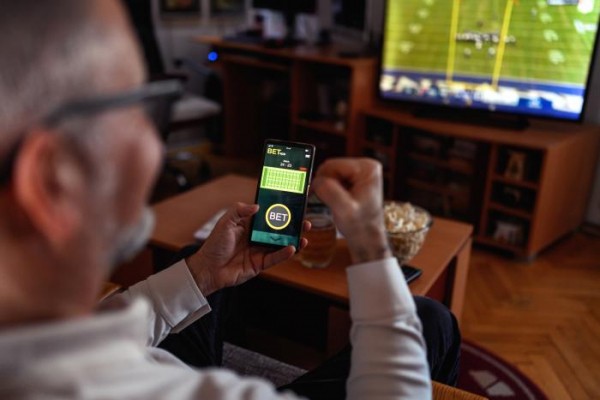
Photo by iStock

Concerns include gambling addiction, games being rigged, and children gambling

A 2022 poll found that the majority of Americans (54%) were neutral on the issue of sports betting, but now, according to the latest Washington Post-University of Maryland poll, more Americans are taking a negative stance.

More than one-third (36%) of Americans in the 2025 poll said that the increasing number of states allowing sports betting “is a bad thing,” up from the less than one-quarter (23%) of Americans who had said the same thing in 2022.

“More attention grabbing is that the increase is fueled by the most engaged fans—the increase was 22 points among those who watch sports several times a week and 17 points among sports bettors,” said Mike Hanmer, Director of the University of Maryland Center for Democracy and Civic Engagement (CDCE). “This might well sound alarms for the leagues and sports media companies alike.”

On the other hand, 14% of adults said that people’s ability to place bets on sporting events was “a good thing,” compared with the 23% who said the same in 2022. Forty-nine percent in 2025 provided a neutral response.

The CDCE conducted the poll with The Washington Post and UMD’s Shirley Povich Center for Sports Journalism via online and phone interviews with 1,032 American adults between December 4 and 7 through the SSRS Opinion Panel. 

The poll shows that fewer than one in five (19%) of all respondents said that sports betting made the sport “more interesting,” but that number jumped to 51% among those respondents who placed a sports bet in the last year.

The poll also found that while 56% are confident that professional sports games are played competitively and without the influence of gambling, 44% are not confident.

“Sports betting scandals haven't eroded trust in sports in ways that are evident in TV ratings or attendance,” said Mark Hyman, the Director of the Shirley Povich Center for Sports Journalism. “But these poll results raise questions. When only a slim majority say they are very confident now about the outcomes, what might be the impact of game-fixing incidents in the future?”

When asked about how concerned they were about addiction to sports gambling, games being rigged, and children potentially gambling, 70%, 66%, and 64% said they were either very or somewhat concerned. Concern in each of these areas did not increase when compared to the 2022 poll, however.

“A policy change allowing sports betting in a larger number of states has dramatically changed this part of our culture in a short amount of time,” Hanmer said. “We look forward to continuing to study this issue and exploring the ways that policy and sports shape one another.”

Find additional insights in The Washington Post

Published on Wed, 01/07/2026 - 14:45

College of Behavioral & Social Sciences
  • Facebook
  • Twitter
  • Instagram
  • LinkedIn

Department of Government and Politics

3140 Tydings Hall
Preinkert Drive
College Park, MD 20742

Main Office:
301-405-4156
Undergraduate Advising:
301-405-4168

Links
  • Contact Us
  • Undergraduate Student Blog
  • UMD Land Acknowledgement
  • Give to Government and Politics
  • UMD Staff Directory
  • Alumni
  • UMD Web Accessibility
© 2026 College of Behavioral & Social Sciences. All Rights Reserved.
Login