

I have taught a variety of undergraduate and graduate classes including seminars on Comparative Politics, Latin American Politics, Party Politics, Political Economy, and Methods. All of my courses are writing intensive, requiring students to understand theoretically sophisticated materials and to produce original arguments about politically relevant events.
Calvo, Ernesto
Bio
Dr. Ernesto Calvo is the Director of the Interdisciplinary Lab for Computational Social Science (iLCSS) and Professor of Government and Politics at the University of Maryland. His research centers on the study of comparative political institutions, social media, political representation, and social networks. His work lies at the intersection of big data, survey experiments, and institutions. He is the author of a number of books on comparative institutions and social media, including Non-Policy Politics: Rich Voters, Poor Voters, and the Diversification of Electoral Strategies (Cambridge University Press 2019) with María Victoria Murillo; Legislator Success in Fragmented Congresses in Argentina (Cambridge University Press 2014); and Fake News, Burbujas, Trolls y Otros Encantos: Cómo funcionan (para bien y para mal) las redes sociales (Siglo XXI Editores 2020) with Natalia Aruguete. Professor Calvo has authored over 70 publications in the United States, Latin America and the Caribbean, and Europe. His research has been recognized by the American Political Science Association with the Lawrence Longley Award, the Luebbert Best Article Award, and the Michael Wallerstein Award.
Areas of Interest
- Congress, Elections, Statistical Methods
Research Topics
- Methodology
- Comparative Politics
My research covers a broad range of issues of both practical and theoretical relevance to the comparative study of democratic institutions. Most of my work focuses on inequities in the allocation of democratic authority, with an emphasis on the manipulation of elections, congresses, and social media.
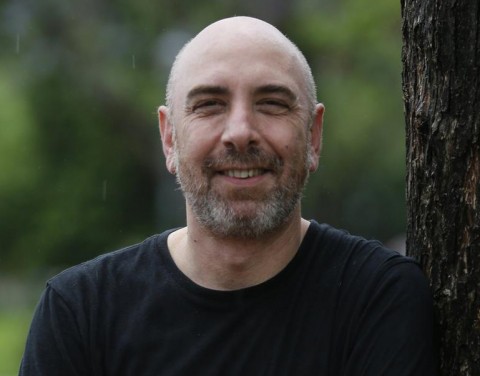
Ernesto Calvo
Professor and Co-Director of Graduate Studies
| 3140 Tydings Hall
| ecalvo@umd.edu
| (832) 276-7890